
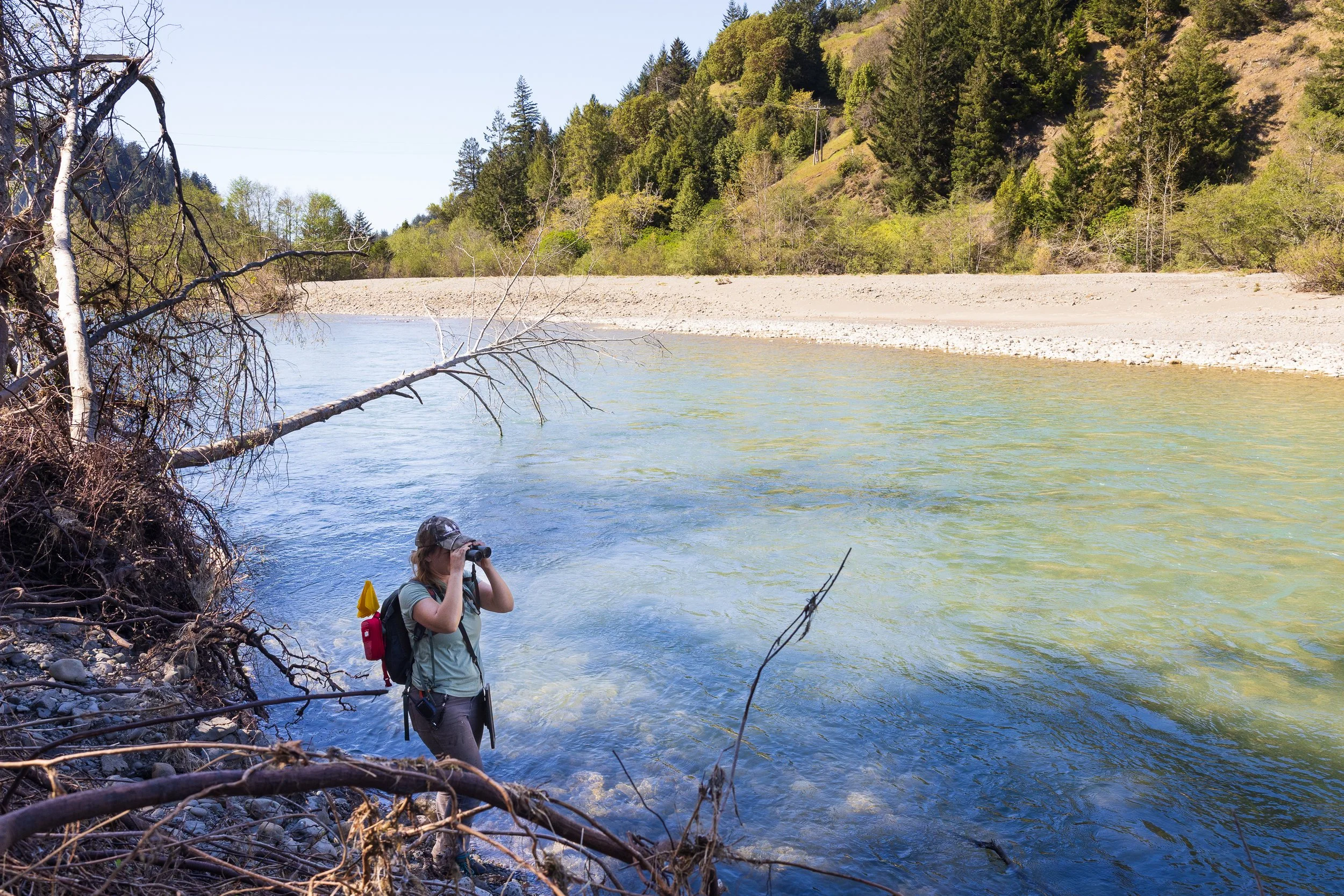
Cannabis for Conservation (CFC) is a science-based 501(c)(3) environmental nonprofit advancing ecological stewardship across private working lands in Northern California. We partner with landowners, communities, and public agencies to restore watersheds, improve forest health, and conserve wildlife for long-term rural resilience.
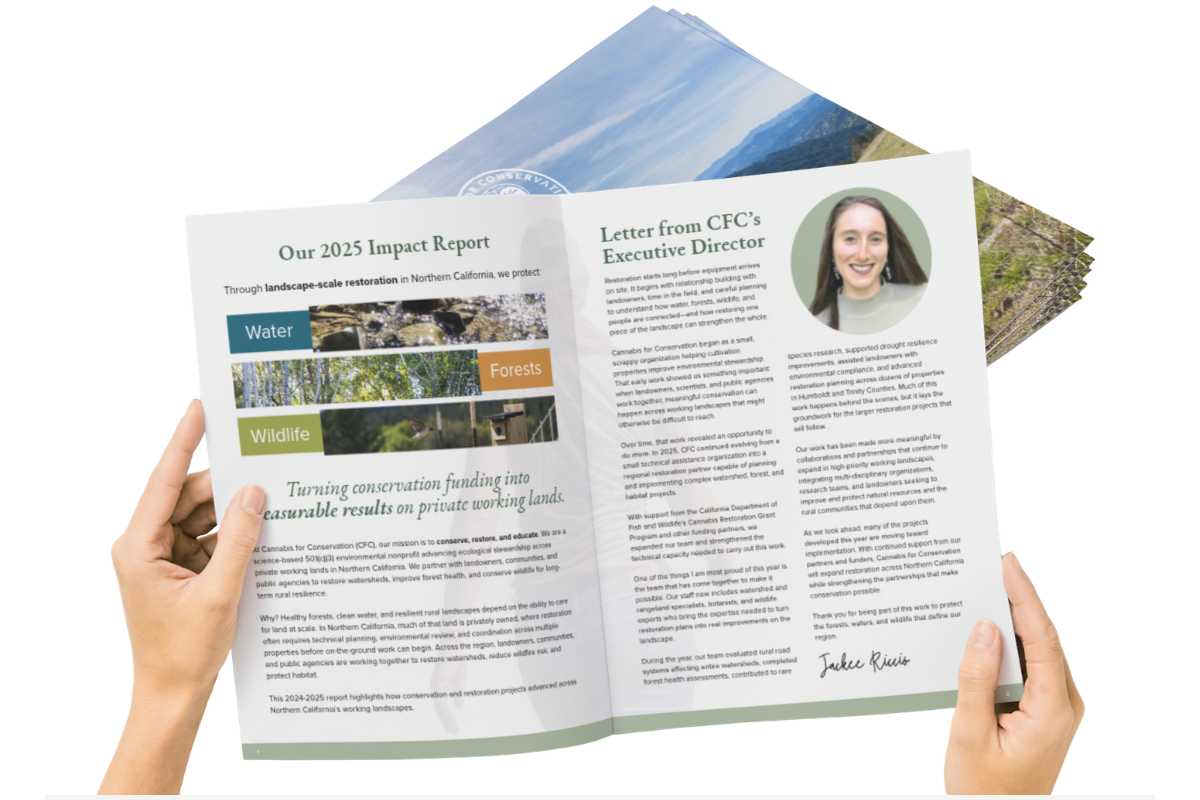
GROWING CHANGE
Across the Emerald Triangle, forests, streams, roads, and wildlife habitat are all connected — what happens on one property can shape water quality, fire risk, and habitat for miles downstream. In 2025, we worked alongside landowners, scientists, and public agencies to plan and advance restoration across 17 watersheds in Humboldt and Trinity Counties, from sediment reduction and drought resilience to forest health and rare pollinator research. Ready to see how this work is turning conservation funding into lasting change on the ground?
History
CFC’s Early Days
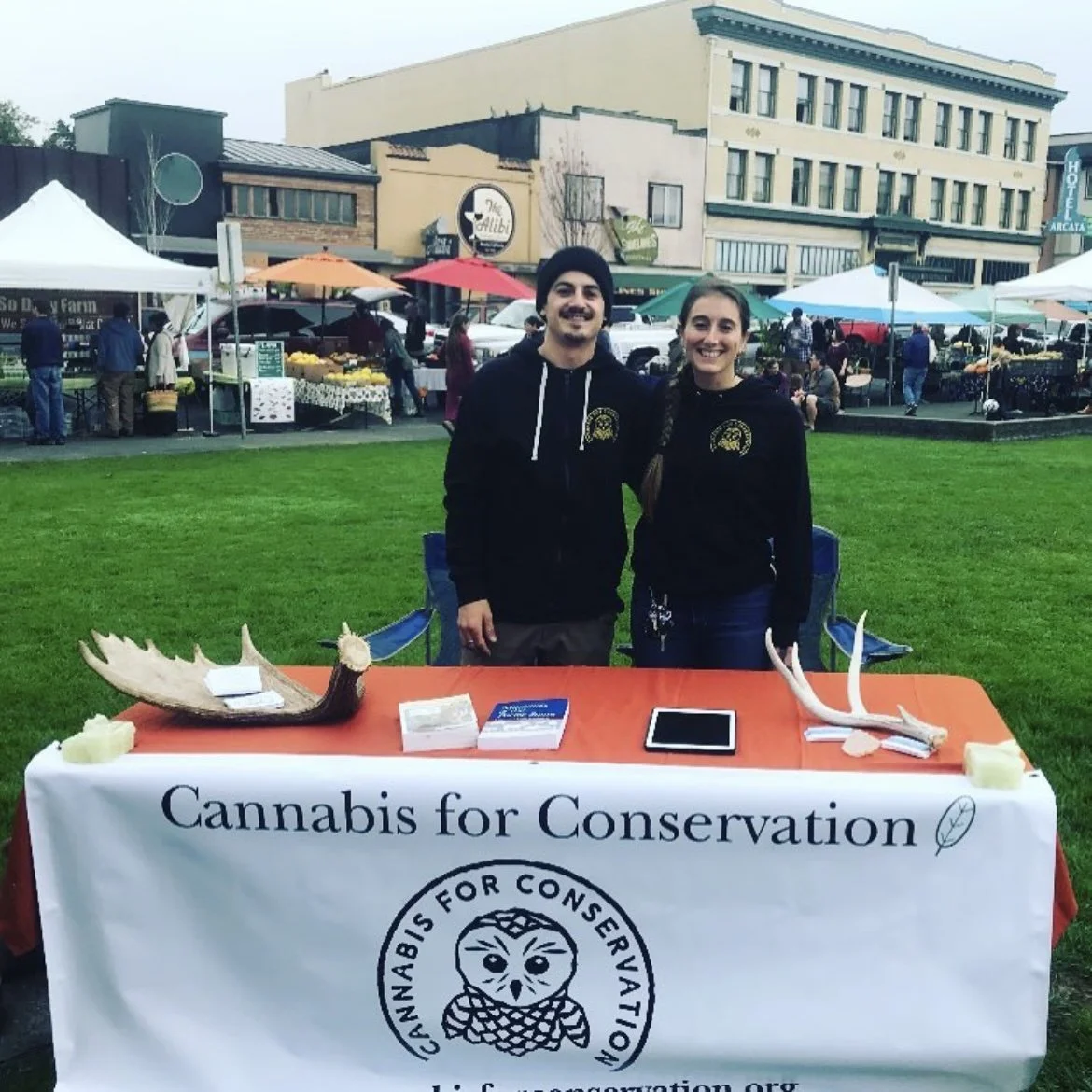
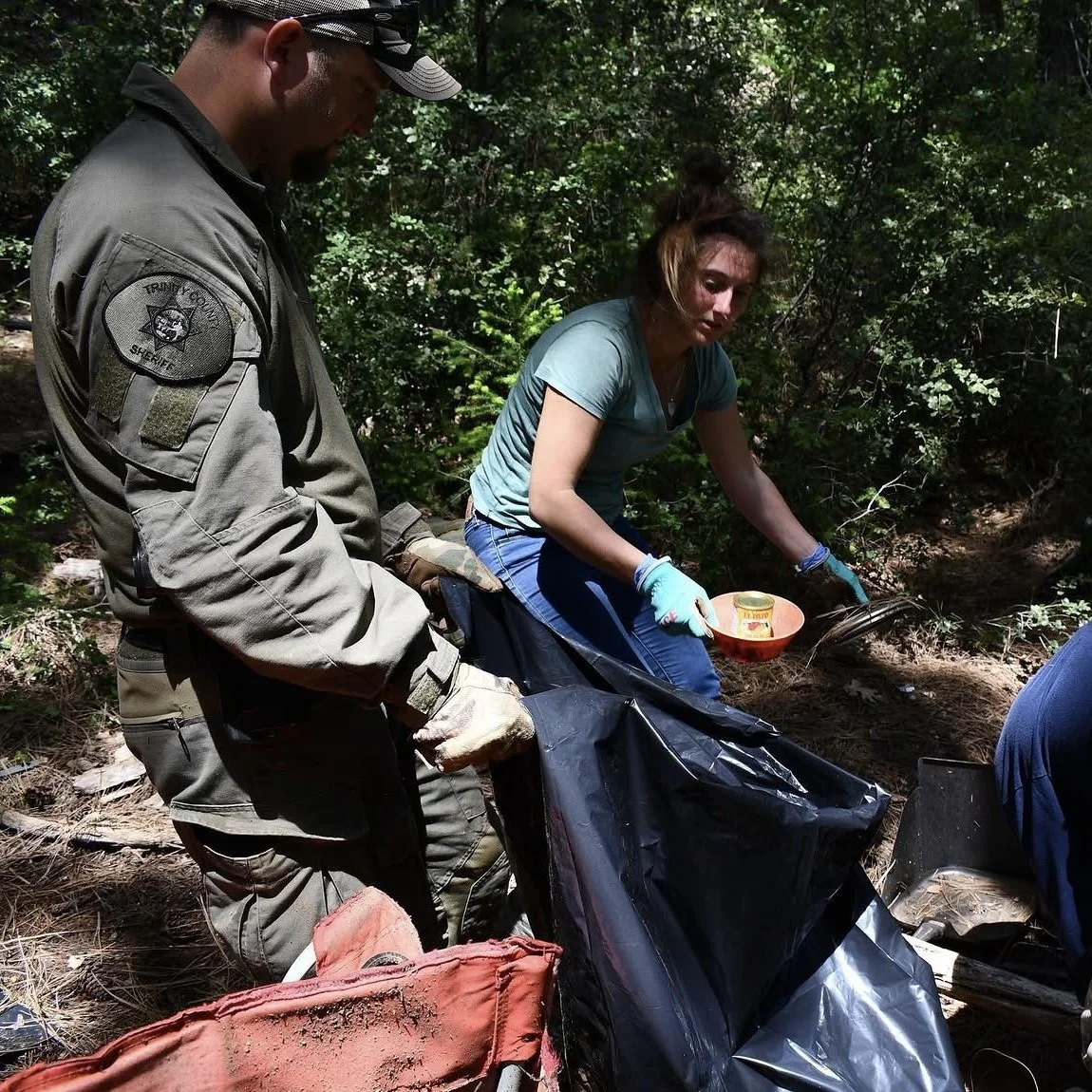
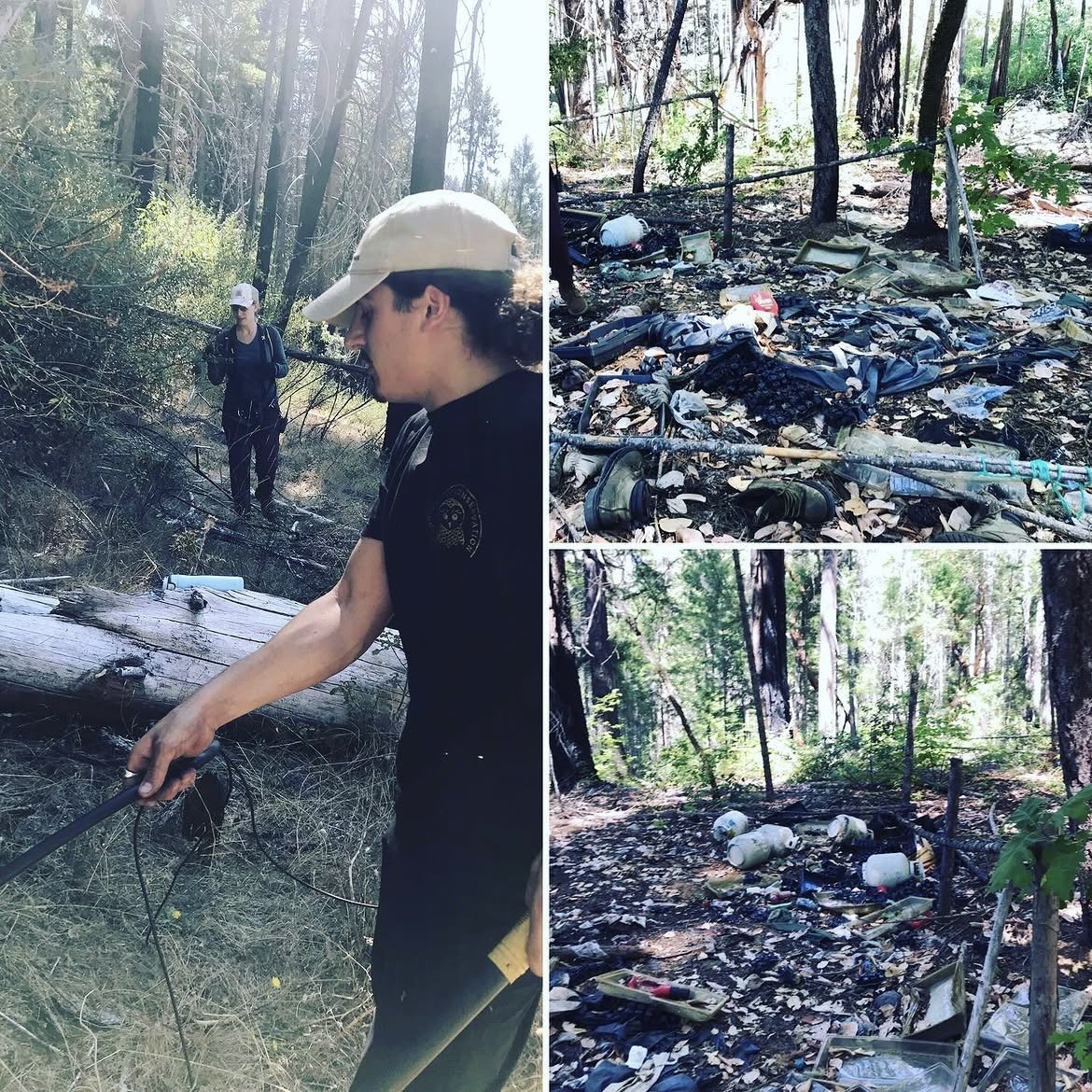
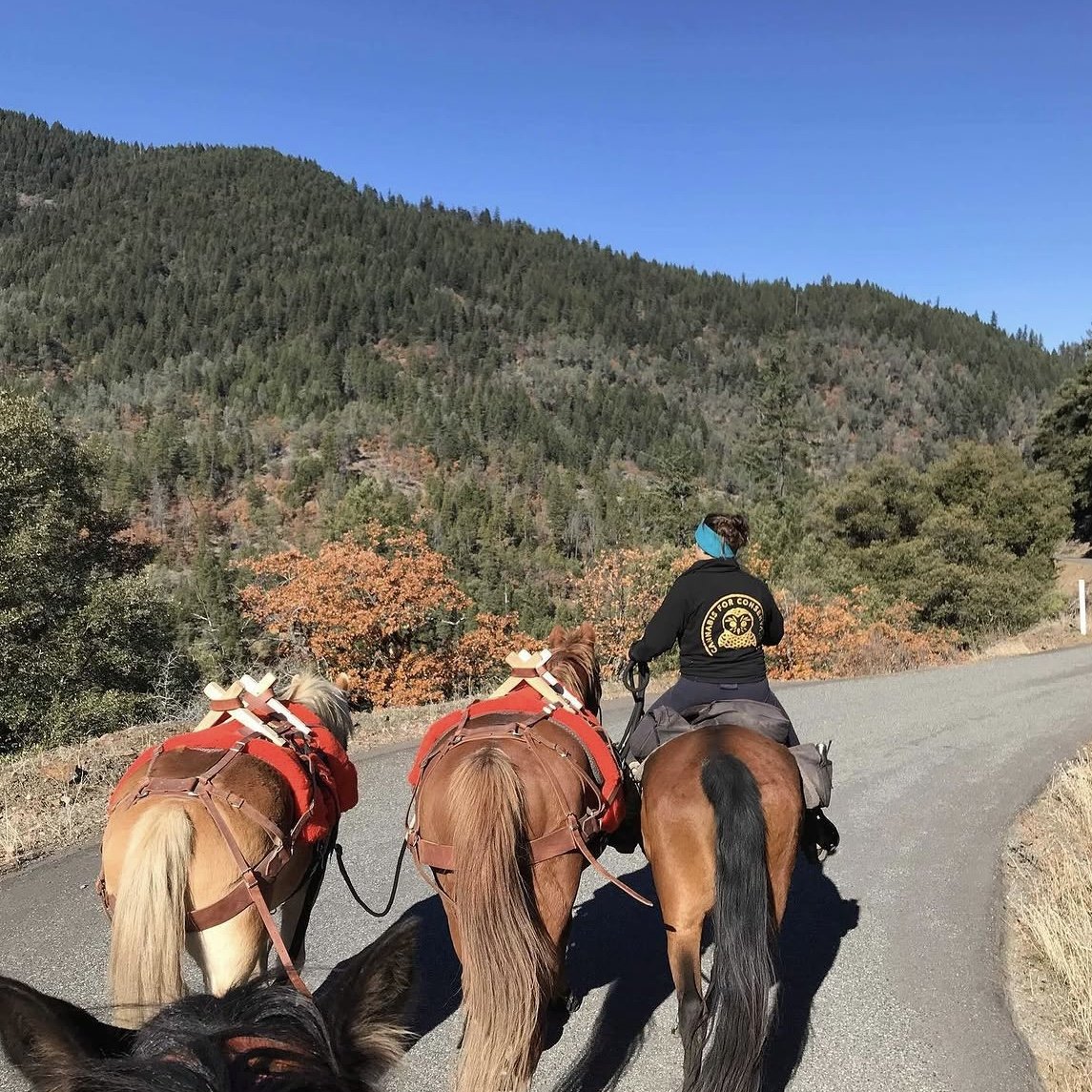
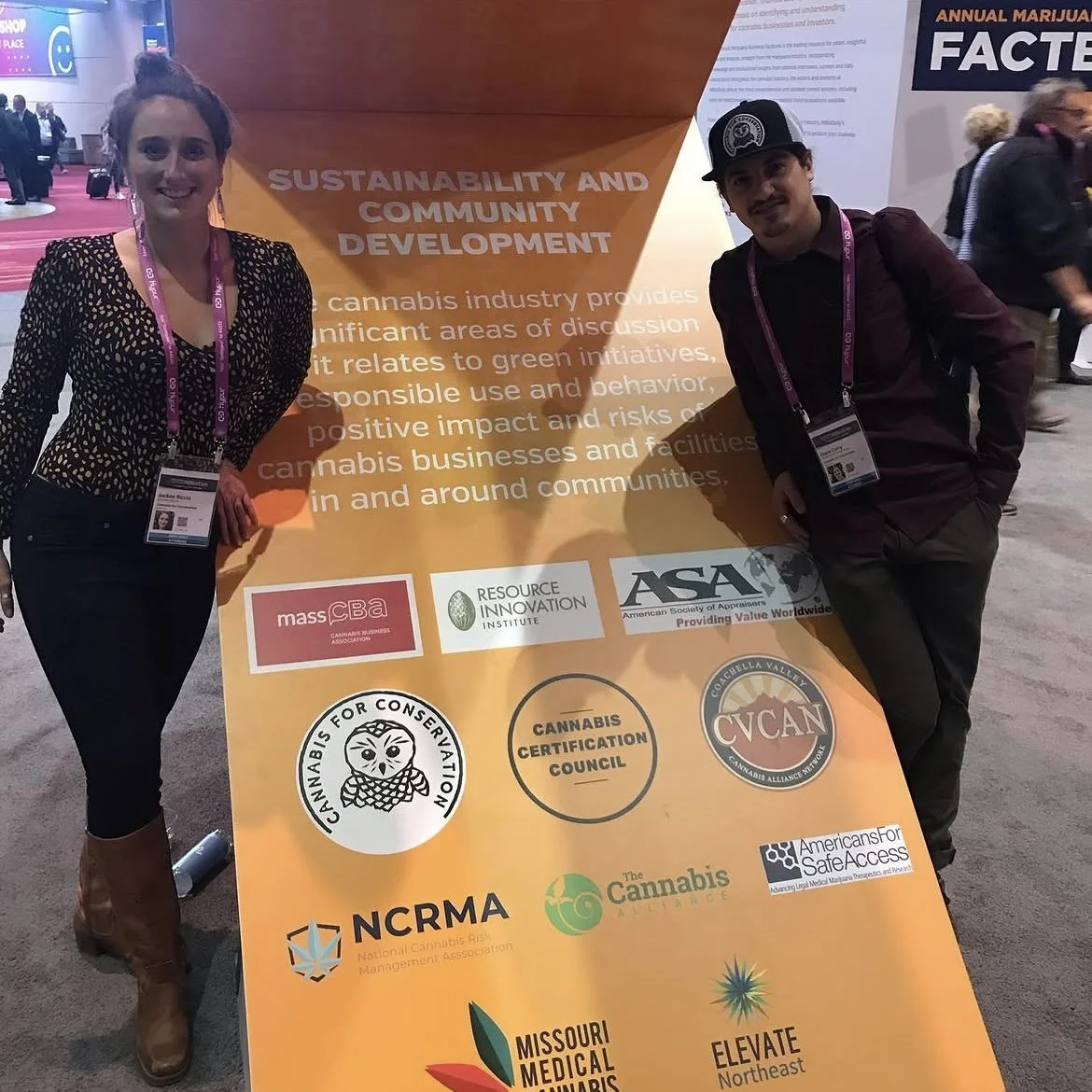
California legalized recreational cannabis with Proposition 64 in 2016. For decades prior to legalization and presently, cannabis was the economic backbone for the communities of Humboldt, Mendocino, and Trinity Counties, constituting what is widely known as the Emerald Triangle, and the birthplace of the US’s cannabis industry. Traditional cultivation was significantly less expansive on the landscape, and held a culture of stewardship. As demand for cannabis and profitability grew, so did the prevalence of cultivation. The expansiveness of cultivation occurring on the landscape combined with unsustainable practices impacted the sensitive, biodiverse ecosystems of Northern California, manifesting as low water levels from stream diversion, eutrophication of watersheds from fertilizer run-off, habitat and connectivity loss, and the wide-spread poisoning of wildlife from anti-coagulant rodenticides and other pesticides. Scientists have documented these effects, and many conservation organizations now work to address them. As a nascent legal industry dependent on healthy natural systems, we saw a need to institute an industry conservation standard that expands beyond sustainable cultivation practices, and addresses stewardship from an ecosystem-level approach. The agricultural industry as a whole has a long-running, well-developed engagement with conservation work, and we’ve brought that ethic to cannabis.
These ecological issues emphasize the need for the cannabis industry to favor small, regenerative farms that manage for and conserve wildlife. Our goal is to expand the industry sustainability ethic to include biodiversity conservation, adaptive wildlife management, and ecological monitoring, and in doing so, unite the industry in a culture of stewardship. We see a great opportunity in the burgeoning industry to set an environmental standard that could be emulated by other agricultural sectors, and are proud to be the first cannabis-focused environmental organization to receive a 501(c)3 status.
Further our Mission
Our organization exists thanks to the agencies, foundations, and individual contributions that support us. If you’d love to help us advance ecological stewardship across Northern California, find more information on donation and other forms of support here. Thank you!
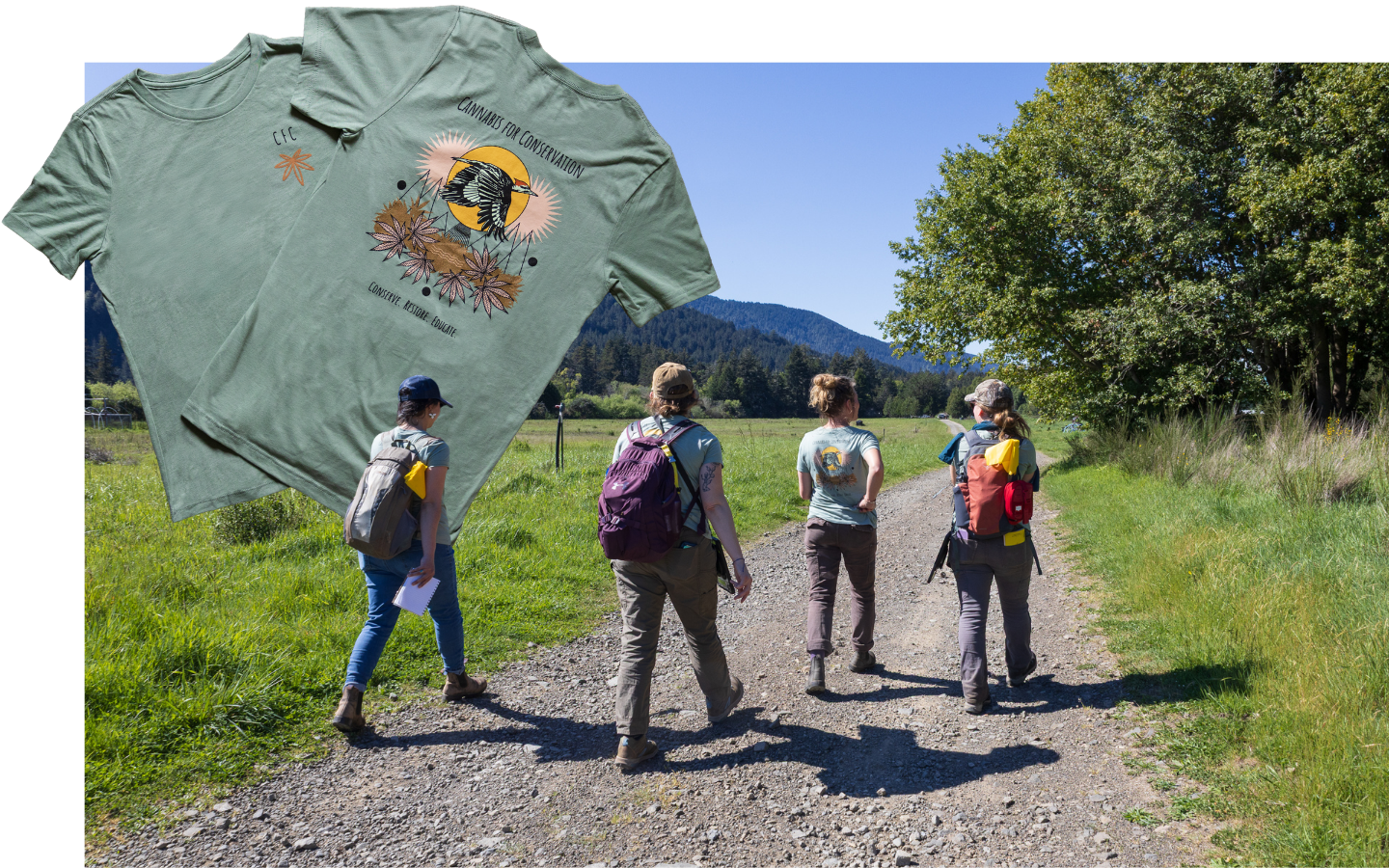
Support and spread awareness for our mission in style:
Acquire your very own CFC Pileated Woodpecker shirt today!